


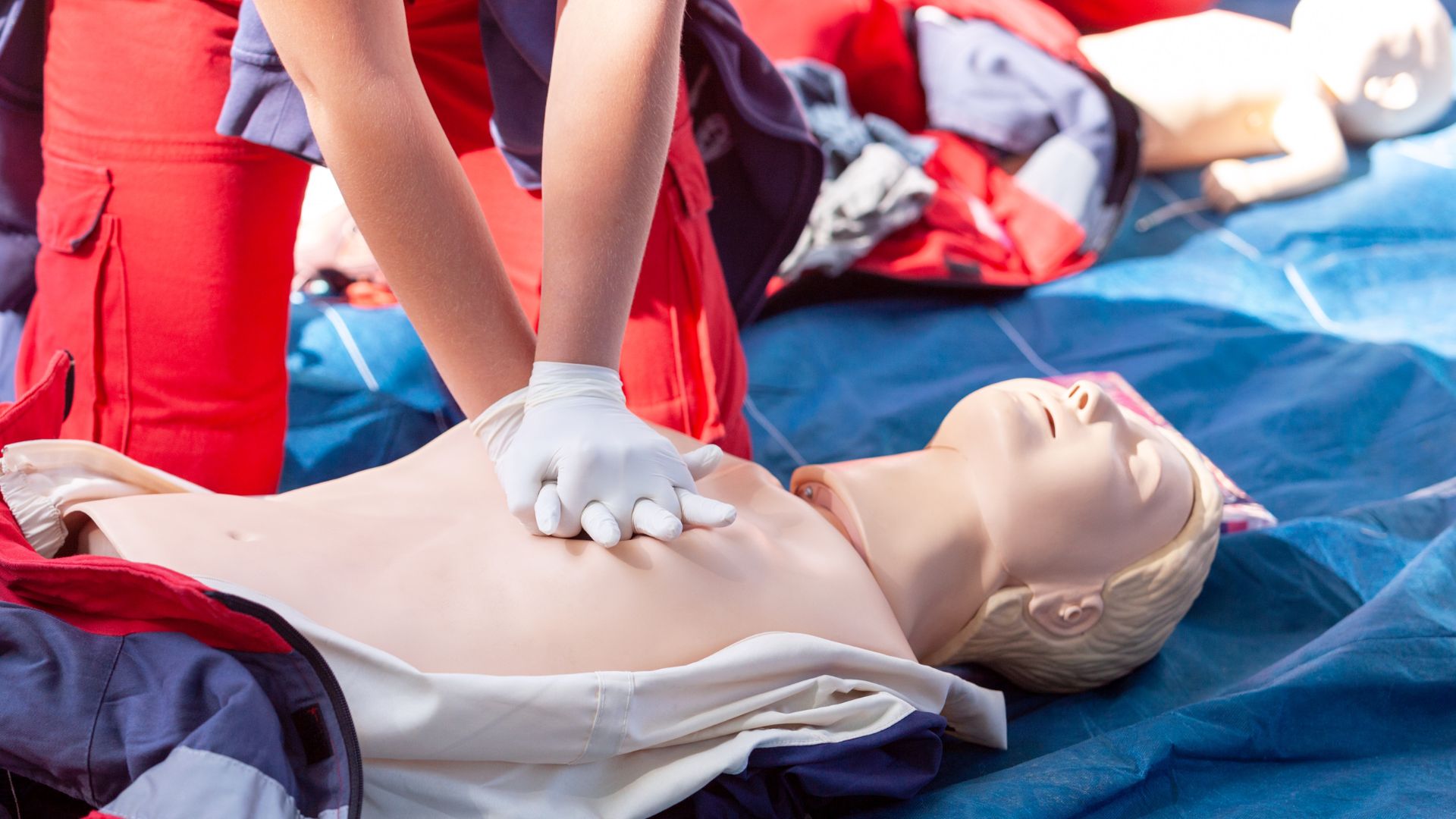
CPR certification courses teach people how to respond during emergencies in healthcare and non-healthcare settings. The training includes resuscitation and emergency assessment, with content tailored to the role and setting. Online courses offer one way to complete the training, and in-person classes add hands-on skills practice. Here are FAQs about CPR certification courses:
What CPR Courses Are Available?
BLS (Basic Life Support) trains healthcare professionals and people with a duty to respond to emergencies. ACLS (Advanced Cardiovascular Life Support) delivers advanced cardiovascular life support training, and PALS (Pediatric Advanced Life Support) focuses on healthcare providers who work with children and infants. Combination courses pair two or more healthcare provider certifications within the same course. The certification combinations include:
- ACLS/BLS
- PALS/BLS
- PALS/ACLS
- PALS/BLS/ACLS
Each combination course has its own certification requirements, and some courses require an existing credential before enrollment. Heartsaver courses provide a separate pathway for non-healthcare providers and people with emergency-response responsibilities who require CPR certification. The courses include Heartsaver First Aid, Heartsaver CPR & AED, and Heartsaver CPR, AED & First Aid.
Specialized training includes ECG & Pharmacology and Peripheral IV Skills Certification. ECG & Pharmacology teaches emergency-medicine personnel about heart anatomy, basic electrophysiology, and ECG measurements. Peripheral IV Skills Certification teaches healthcare professionals IV insertion techniques and post-insertion care, along with assessment and management skills.
What Skills Does CPR Cover?
BLS instruction includes CPR for adults, children, and infants, along with AED use and first aid. Participants practice single-rescuer CPR and team-based resuscitation for emergencies inside and outside healthcare facilities. Airway-obstruction relief is also included, along with the use of a resuscitation mask and bag-valve mask. ACLS builds on BLS with advanced cardiovascular life-support training.
Participants practice rhythm recognition and airway management alongside resuscitation algorithms. The training also addresses acute coronary syndrome and peri-arrest conditions. PALS teaches participants to assess pediatric emergencies systematically, apply PALS treatment algorithms, perform basic life support and effective resuscitation, and develop effective team dynamics.
When Does Certification Expire?
American Heart Association (AHA) cards remain valid for up to two years. Once the card reaches its expiration date, you must renew your certification. Renewal students need to bring their previous AHA Provider eCard or physical card to the renewal class. If your card expired less than 30 days ago, you can still take a renewal course.
What Does Certification Require?
In-person certification requires completing the selected course and meeting its testing requirements. The course provides the instruction needed to complete the American Heart Association (AHA) certification process, which includes the applicable exam and skills validation. Online certification follows a different format.
Participants complete the eLearning course and take the AHA HCP exam online, then complete an in-person skills validation. The AHA issues the certification card after you successfully complete the exam and skills validation. Group and in-home CPR classes provide training without official certification. A full certification course is required for anyone who needs a certification card.
Get CPR Certification
A current certification keeps documented emergency-response training up to date. Since certification requirements depend on the role, original and renewal courses support specific training needs. Group, corporate, and in-home training bring CPR instruction to workplaces and organizations, and they also support new parents and caregivers. Explore the CPR certification courses today and register for the training required for your role.
