


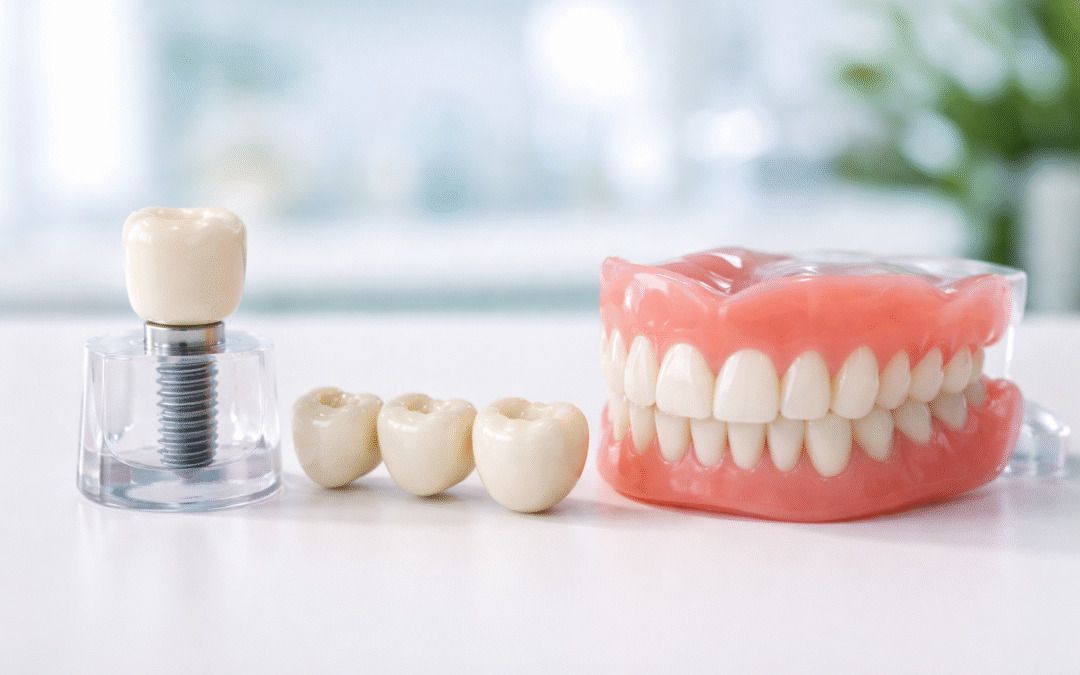
Missing teeth can affect more than just your appearance. They can make it difficult to eat, speak clearly, and maintain proper oral health. Fortunately, modern dentistry offers several effective tooth replacement options, with dental implants, bridges, and dentures being the most common.
Each solution has its own advantages, limitations, and ideal use cases. Understanding the differences can help you make an informed decision with your dentist.
Why Replacing Missing Teeth Is Important
When a tooth is lost, the surrounding teeth may gradually shift into the empty space, causing bite problems and increasing the risk of further dental issues. Bone loss in the jaw can also occur over time, affecting facial structure and oral function.
Replacing missing teeth helps:
- Restore chewing ability
- Improve speech
- Maintain facial appearance
- Prevent teeth from shifting
- Support long-term oral health
Dental Implants
Dental implants are artificial tooth roots made from biocompatible titanium that are surgically placed into the jawbone. Once the implant fuses with the bone, a custom-made crown is attached to complete the restoration.
Benefits
- Looks and feels like a natural tooth
- Can last for decades with proper care
- Helps preserve jawbone density
- Does not rely on neighboring teeth for support
- Easy to maintain with regular brushing and flossing
Considerations
- Higher initial cost than other options
- Requires sufficient jawbone for placement
- Healing period may take several months
- Minor oral surgery is required
Dental implants are often considered the most durable and natural-looking solution for replacing one or more missing teeth.
Dental Bridges
A dental bridge fills the gap created by one or more missing teeth by anchoring an artificial tooth to the adjacent natural teeth or dental implants.
Benefits
- Restores appearance and function
- Usually completed within a few dental visits
- Less expensive than implants
- Fixed in place and does not require removal
Considerations
- Healthy neighboring teeth may need to be reshaped
- Does not prevent bone loss beneath the missing tooth
- Typically lasts 10 to 15 years with proper care
Dental bridges are a practical option for patients who are not suitable candidates for implants or prefer a quicker treatment.
Dentures
Dentures are removable appliances designed to replace multiple missing teeth or an entire arch of teeth. They are available as partial dentures for patients missing several teeth or complete dentures for those who have lost all teeth.
Benefits
- Most affordable tooth replacement option
- Suitable for replacing many or all missing teeth
- Non-surgical treatment
- Modern dentures provide improved comfort and appearance
Considerations
- Must be removed for cleaning
- May require adjustments over time
- Can feel less stable than implants or bridges
- Bone loss may continue after tooth loss
Dentures remain a reliable solution, particularly for patients seeking an economical way to restore their smile.
Comparing Your Options
| Feature | Dental Implants | Dental Bridges | Dentures |
|---|---|---|---|
| Appearance | Excellent | Very Good | Good |
| Stability | Excellent | Very Good | Moderate |
| Longevity | 20+ years | 10–15 years | 5–10 years |
| Jawbone Preservation | Yes | No | No |
| Surgery Required | Yes | No | No |
| Maintenance | Similar to natural teeth | Similar to natural teeth | Daily removal and cleaning |
How to Choose the Right Option
The best tooth replacement depends on several factors, including:
- Number of missing teeth
- Overall oral health
- Jawbone condition
- Budget
- Personal preferences
- Long-term treatment goals
A comprehensive dental examination, including X-rays, can help determine the most appropriate solution for your specific needs.
Caring for Your Tooth Replacement
Regardless of which option you choose, proper oral hygiene is essential.
Maintain your restoration by:
- Brushing twice daily
- Flossing every day
- Visiting your dentist for regular checkups
- Avoiding tobacco products
- Limiting sugary foods and drinks
Good oral care helps extend the lifespan of your dental restoration and protects your remaining natural teeth.
Conclusion
Dental implants, bridges, and dentures all offer effective ways to replace missing teeth and restore your smile. Dental implants provide the most natural and long-lasting solution, bridges offer a reliable fixed alternative, and dentures remain an affordable option for replacing multiple teeth.
Consulting with a qualified dentist is the best way to determine which treatment aligns with your oral health, lifestyle, and budget. With the right choice and proper care, you can enjoy improved function, confidence, and long-term oral health.
