


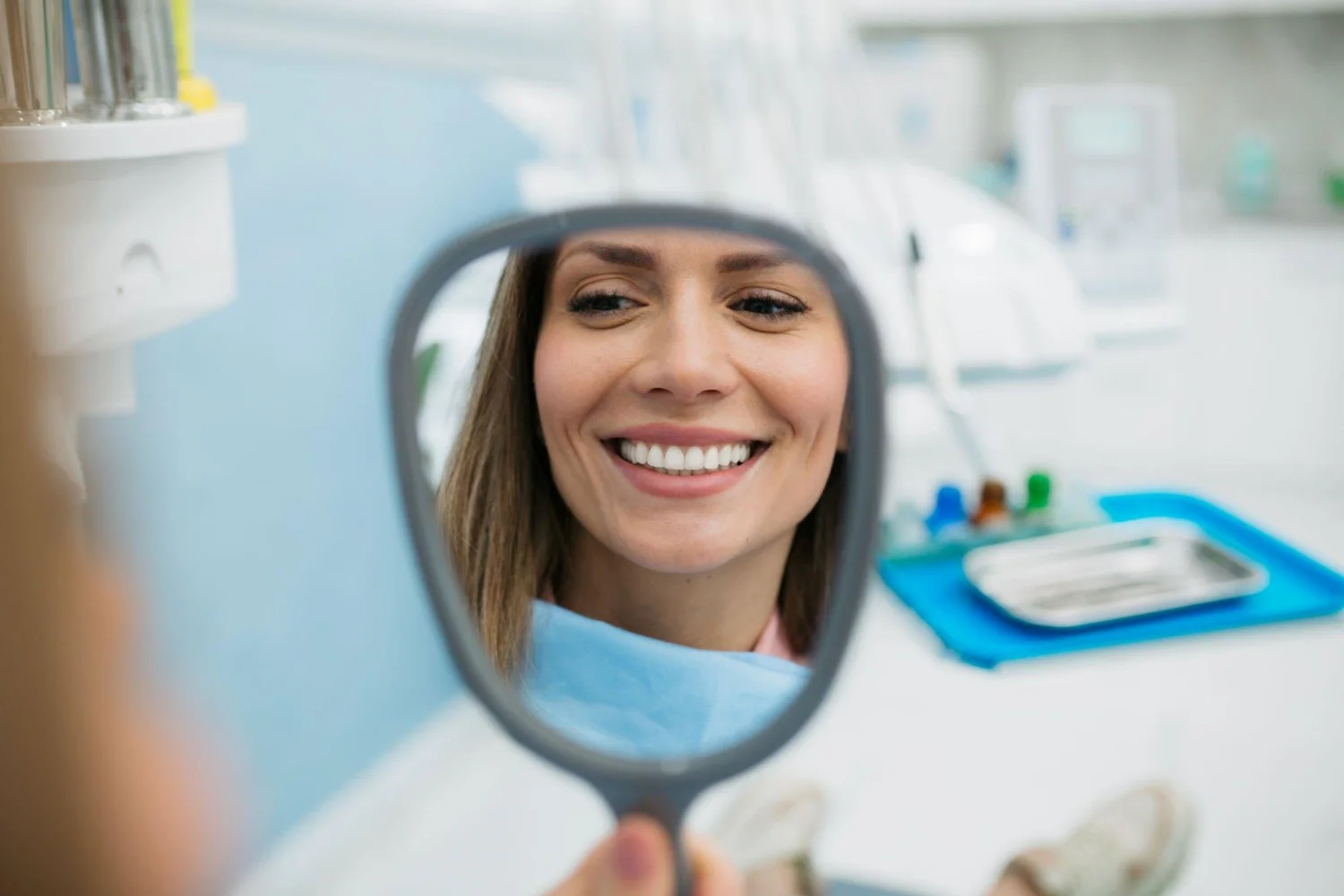
The color of your teeth can change gradually over time. Adults may find that their smiles have grown duller or more yellow with age, and this shift is common. Teeth whitening is a common cosmetic dental treatment, since it addresses these changes in a straightforward way.
What Causes Teeth Discoloration?
Discoloration develops for several reasons, and identifying the source can guide the best approach to treatment. The causes typically fall into two broad groups: surface stains and deeper color changes within the tooth structure. Common contributors include:
- Food and Drink: Coffee, tea, red wine, and deeply pigmented foods such as berries and tomato-based sauces can leave stains on the outer layer of enamel over time.
- Tobacco Use: Smoking and chewing tobacco introduce substances that cling to the teeth and produce yellow or brown discoloration.
- Aging: As people grow older, the outer enamel thins and the layer beneath it, called dentin, becomes more visible. Dentin has a naturally darker, yellowish tone.
- Medications: Some prescriptions may affect tooth color.
- Injury or Trauma: A blow to a tooth can change its color as the tooth responds to the damage.
- Hygiene Habits: Irregular brushing and flossing allow stain-producing residue and plaque to build up.
Surface stains generally respond well to whitening, but deeper discoloration may call for other cosmetic options.
What Is Teeth Whitening?
Teeth whitening is a cosmetic treatment designed to lighten the shade of the teeth and reduce visible stains. Many whitening methods rely on peroxide-based agents that break down stain compounds on and within the enamel. In-office whitening is performed by a dental professional. The treatment typically uses a strong whitening agent applied directly to the teeth, and it is sometimes activated by a special light. Because it is supervised, this method often produces noticeable results in a single visit and allows the surrounding gum tissue to be protected during the process. A dental professional can review your teeth and explain which method aligns with your goals.
What Should You Expect?
Results and aftercare vary from person to person. Understanding what follows the procedure helps you maintain a brighter appearance. Some people notice temporary tooth sensitivity after whitening, but this effect usually fades soon after. To maintain your results, keep these practices in mind:
- Limit Staining Foods and Drinks: Reducing coffee, tea, red wine, and dark sauces slows the return of stains.
- Rinse or Brush After Consuming Pigmented Items: Doing so removes residue before it settles.
- Avoid Tobacco Products: Continued use can quickly undo whitening results.
- Maintain a Consistent Oral Care Routine: Regular brushing, flossing, and dental cleanings may support lasting brightness.
Whitening is not permanent, and the effect fades over months or years depending on your habits.
Seek Professional Dental Services
Teeth whitening offers a practical way to refresh the appearance of your smile, but results depend on choosing a method suited to your specific needs. A dental professional can examine your teeth, identify the source of discoloration, and recommend a treatment that matches your situation. If you are thinking about brightening your smile, speaking with a dental provider is a sound step toward a plan built around healthy, well-informed care.
