


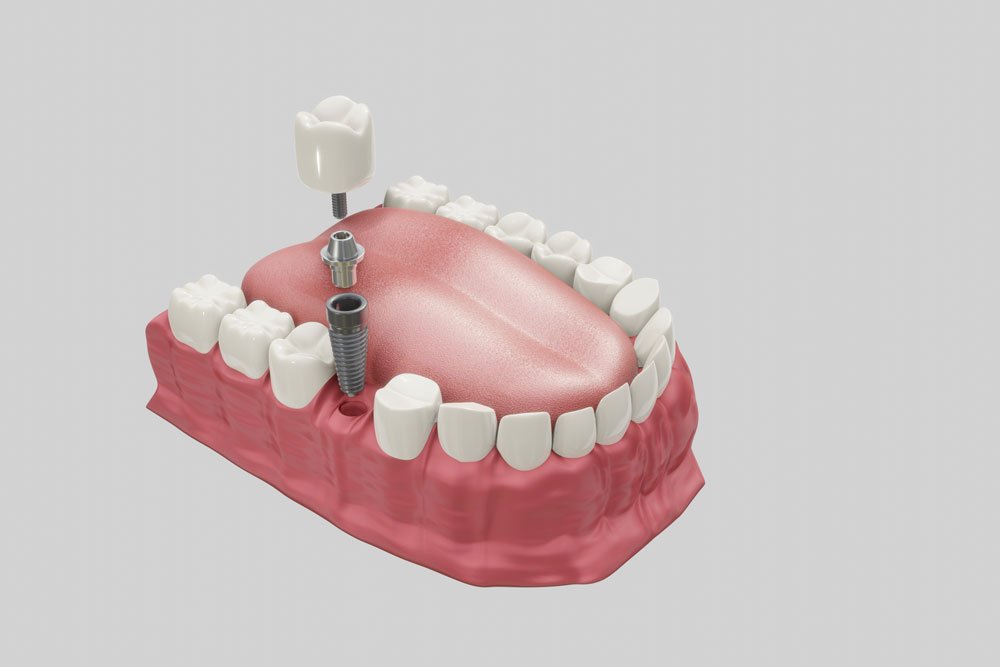
Dental implants are titanium posts that a surgeon places into the jawbone to replace missing tooth roots. They fuse with the bone through a process called osseointegration; this process creates a stable, long-lasting foundation for replacement teeth. Unlike dentures or bridges, which rely on adjacent teeth or surface adhesion, implants offer a durable solution for tooth loss. Here is more information on what these dental devices are and who benefits from them:
What Are Dental Implants?
A dental implant consists of three main parts: a titanium post, an abutment, and a crown. The post is surgically inserted into the jawbone, and it acts as an artificial tooth root. Once the surrounding bone heals, the abutment connects the post to a custom-made crown. This crown is designed to match the patient’s natural teeth.
Titanium is the material of choice for dental implants because the body generally accepts it without rejection, and it has the strength to withstand regular chewing forces. Dentists place implants in stages. The process begins with surgical placement. It concludes months later once the bone has fully integrated with the post. Bone density and the patient’s healing rate influence this timeline.
Who Do They Help?
These dental devices help patients who have lost one or more teeth due to decay, gum disease, or physical trauma. They also benefit people who struggle with loose or uncomfortable dentures, because implants anchor directly into the jaw instead of resting on the gums. Bone loss often develops after long-term tooth absence; older adults who experience it may find that dental implants restore both function and facial structure.
How Are They Permanent?
Dental implants become a permanent part of the jaw through osseointegration, the biological process in which bone cells grow around and attach to the titanium surface. This bond forms gradually. Once it is established, the implant functions much like a natural tooth root, and it transfers bite force directly into the jawbone. This separates implants from removable options like dentures.
The implant is anchored in bone rather than positioned above the gumline, so it does not shift, slip, or require removal for cleaning. This structural stability is a key advantage. When patients maintain proper oral hygiene and attend regular dental visits, their implants can last several decades. The crown attached to the implant may eventually need replacement due to normal wear, but the titanium post itself rarely requires further intervention.
What Are the Benefits?
Dental implants offer several advantages, spanning both functional and structural benefits.
- Bone preservation: Implants stimulate the jawbone during chewing, preventing bone deterioration.
- Improved function: Patients with implants may experience clearer speech and improved chewing function.
- Adjacent tooth protection: Unlike traditional bridges, implants do not require the grinding down of adjacent healthy teeth to support the restoration.
These benefits make dental implants a valuable option for patients seeking a durable, long-term solution to tooth loss.
Seek a Permanent Solution Today
Dental implants address the structural and cosmetic effects of tooth loss in a way that temporary solutions cannot match. From the titanium post that fuses with the jawbone to the custom crown that completes the restoration, each part of the implant recreates the function of a natural tooth. Patients dealing with missing teeth, loose dentures, or bone loss may find implants provide a stable, long-term solution. If you’re missing one or more teeth, talk to a dentist about whether implants are right for your oral health needs. A professional evaluation can determine your candidacy, and they will outline the steps involved.
