


Early signs of skin cancer often appear as small changes, and they sometimes blend into everyday skin issues. A new spot, a slowly changing mole, or a sore that lingers longer than expected may signal a problem. When you know what to look for, you’re able to respond sooner and schedule a dermatology visit before those changes progress. Here’s information about recognizing early signs of skin cancer:
Watching New Spots
Most people develop new freckles or moles over time, and many remain harmless for years. A new spot that differs from existing markings requires attention, especially on sun-exposed areas such as the face, ears, arms, and scalp. If a mole develops during adulthood and continues changing, it may need a professional exam; a dermatologist helps guide the appropriate next steps. Pay attention to any lesion that bleeds with minimal friction or forms a crust that returns after healing, as these patterns align with early skin cancer behavior.
Tracking Changes Over Time
Skin changes often develop gradually, and early skin cancer sometimes progresses without noticeable symptoms. Tracking spots over several weeks or months helps identify changes that might otherwise go unnoticed. To help with monitoring, review the following:
- Look for asymmetry, where one half of a mole doesn’t match the other.
- Check borders that appear jagged, blurred, or irregular instead of smooth and even.
- Watch for color shifts, such as multiple shades in one lesion or new darker areas.
- Measure diameter, since growth beyond a small, stable dot deserves a closer look.
- Note evolving features, including new itching, tenderness, or surface changes.
Checking Different Skin Areas
Sun exposure primarily affects exposed skin, but early signs of skin cancer may also develop in less visible areas. Examine the scalp by parting the hair into sections, and request assistance when certain areas are difficult to see. Check behind the ears, along the jawline, and across the back of the neck. These are areas where hats and sunscreen may provide incomplete coverage. Hands, forearms, and the tops of the feet sometimes receive direct sunlight during daily activities. New rough patches or shiny bumps in these areas warrant attention. Although less frequently exposed, the soles, spaces between toes, and areas beneath the nails may also show early signs of melanoma.
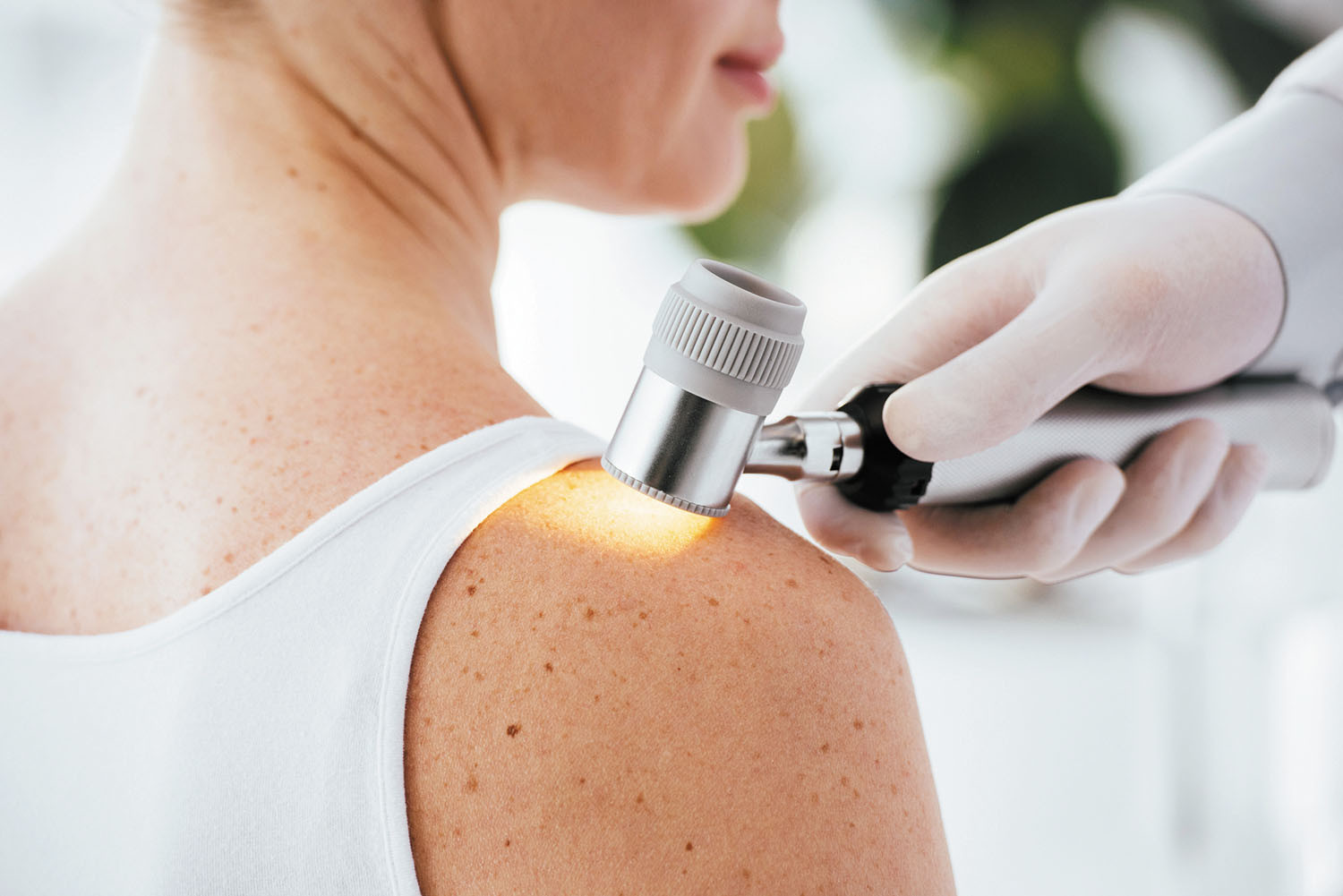
Home skin checks support early detection, but they do not replace comprehensive examinations by a dermatologist. Dermatologists use magnification, pattern recognition, and clinical experience to distinguish harmless growths from potentially suspicious lesions. Early diagnosis and appropriate treatment can improve outcomes for many patients. Regular appointments also establish a record of existing moles and spots, which helps dermatologists identify subtle changes over time.
Schedule a Skin Cancer Evaluation
Self-examinations provide an initial assessment, but changing or persistent lesions require professional evaluation. A dermatologist reviews your medical history, examines your skin, and identifies lesions requiring monitoring or biopsy. If a lesion appears suspicious, a tissue sample can establish a diagnosis and guide subsequent treatment decisions. Combining monthly self-examinations with regular professional evaluations provides a structured approach to identifying skin changes and seeking timely care. Consult a dermatologist today to learn more.
