


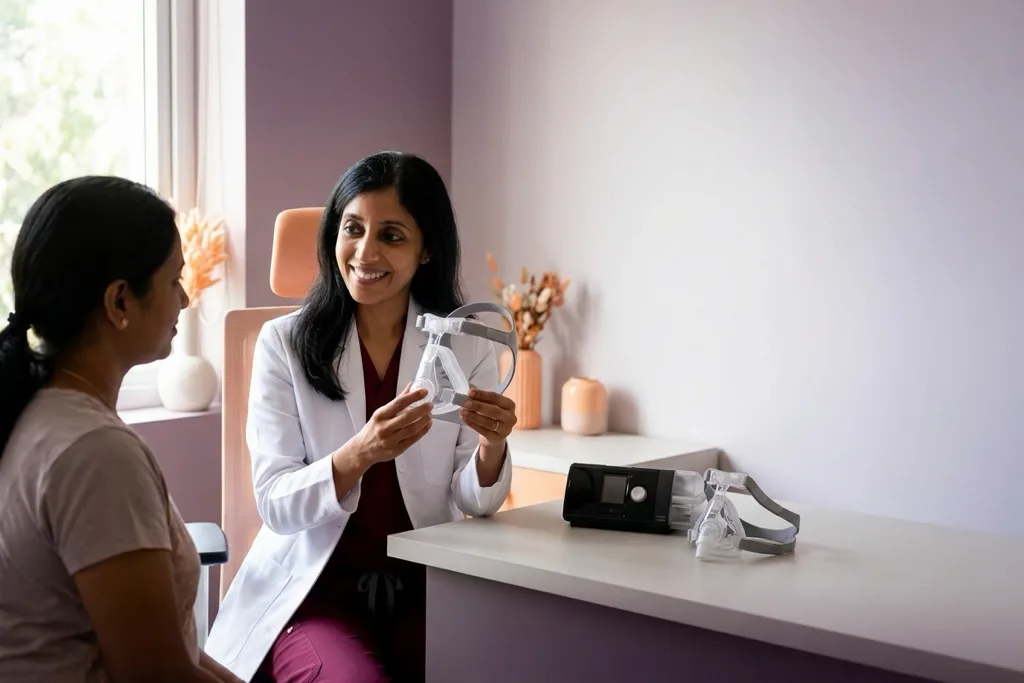
A CPAP clinic supports people with sleep apnea, and this involves equipment setup, mask fittings, and follow-up care. Staff set up your machine, fit your mask, and track your therapy data over time. When you share clear details about your needs, staff members have more information to work with. Here are four topics to raise at your next appointment:
Ask About Equipment
CPAP machines come in several models, and each one has different features and settings. Before you leave your first appointment, ask staff to explain how your device works. Bring a written list of questions to the CPAP clinic to stay on track during the visit. You might ask about these topics:
- Fixed pressure versus auto-adjusting pressure settings
- Built-in humidifier and heated tubing options
- Comprehensive data tracking and access to your reports
- Travel-friendly models and power requirements
Communicate Comfort Issues
If your mask leaks or feels tight, tell the clinic at your next visit. Masks come in nasal, nasal pillow, and full-face styles. Each style fits differently, so another design might suit your face shape better. Bring your current mask with you for a side-by-side comparison.
Many patients notice discomfort from air pressure during the first few weeks. Some machines offer a ramp feature that starts at a lower pressure and rises gradually. Staff members review your settings, and your doctor approves any pressure changes. Write down your current pressure number before your appointment.
Vague complaints give staff little to work with, but specific details help them narrow down the cause. Note the time, location, and frequency of each problem in a notebook or phone app. Since staff do not watch you sleep, your notes fill in the gaps. Mention whether you sleep on your side, back, or stomach.
Report Any Side Effects
CPAP therapy sometimes causes side effects such as dry mouth, nasal congestion, or skin irritation. Some people feel bloated from swallowed air, and others may have morning headaches. Tell the clinic about these symptoms as soon as they start. A short daily symptom log helps staff spot patterns.
While the clinic handles equipment concerns, your doctor manages medical concerns. Clinic staff adjusts your humidity settings, or they may suggest a chin strap for mouth breathing. Report chest pain, shortness of breath, or severe ear pain to your doctor right away. Your clinic records your reports in your file for future visits.
Check Replacement Schedules
CPAP parts wear down with nightly use. Cushions lose their seal over time, and filters collect dust and debris. Worn parts may affect mask fit and machine performance. While schedules vary by manufacturer and insurance plan, many clinics use timelines like these:
- Nasal pillows and full-face cushions
- Disposable filters
- Medical tubing and mask frames
- Additional headgear and water chambers
Visit a CPAP Clinic
If you have questions about your equipment, comfort, or supplies, schedule a visit with your CPAP clinic. Bring your machine, mask, and a written list of concerns. Staff members review your data during the visit, and they answer questions about settings and replacement parts. Call your local CPAP clinic today to book your next appointment.
