


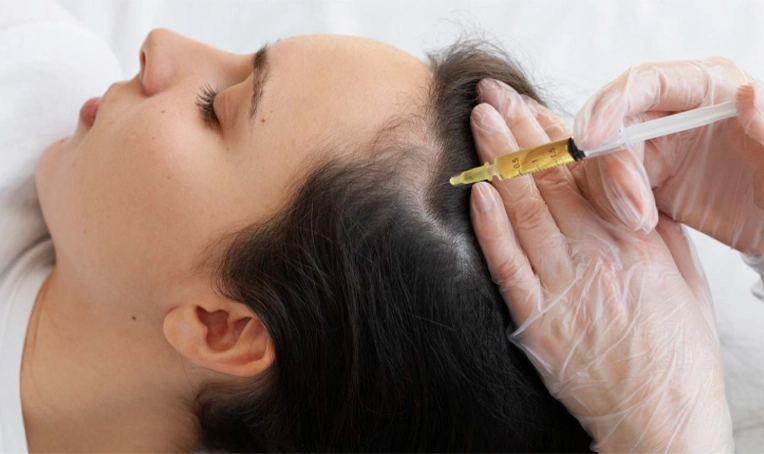
People hearing about PRP for hair loss often want to know whether they are a good match for the treatment. Platelet-rich plasma uses a small sample of your own blood, which is processed and then placed into areas of thinning hair. Not every pattern of shedding responds the same way, so learning who fits this approach helps set realistic expectations.
Who Fits This Treatment
Not every type of shedding responds in the same way, and that is why an evaluation comes first. Since a dermatologist reviews your scalp, pattern of loss, and medical history, they match that information with what PRP for hair loss typically targets. They often hear goals during the visit.
- People with gradual thinning rather than smooth, shiny bald patches sometimes match PRP goals.
- Those who still see short, fine hairs in thinning zones often have follicles that remain present.
- Individuals with realistic expectations about density changes tend to navigate the process more comfortably.
- People who follow aftercare guidance, such as avoiding harsh scalp habits, support their overall plan.
- Those working with a dermatologist who tracks progress visit by visit gain clearer feedback.
Health History And Hair Loss
When blood-related disorders, active infections, or uncontrolled health issues are present, your dermatologist often addresses those first. They sometimes delay PRP until things stabilize. A conversation about supplements, smoking, and past procedures gives your dermatologist a clearer picture. That helps them outline realistic outcomes. Understanding the cause of shedding matters, because PRP tends to focus on follicles that are still alive. A dermatologist may order lab tests, review family patterns, or examine the scalp with magnification, and that process helps separate hormonal causes from other triggers. When shedding links to temporary stressors or nutritional gaps, those factors need attention. They sometimes resolve a large part of the issue. PRP then becomes one piece of a broader strategy, and it works alongside changes in daily habits and medical care.
Expectations And Next Steps
People often ask how quickly they will see changes, and that question ties directly to candidacy. Hair growth cycles move slowly, and they pass through phases that last months. Visible shifts take time. Since results vary from person to person, tracking progress with photos and regular visits helps keep expectations aligned with reality.
PRP works best when it fits into a structured plan rather than a single isolated visit. Dermatologists sometimes pair it with topical or oral therapies, and they review how those pieces interact with your routine. When people understand that combination, they tend to stay consistent. Consistency supports the follicles that remain active. PRP also involves repeat sessions, and sticking with that schedule gives the treatment a chance to influence the growth cycle.
Schedule PRP for Hair Loss
If you want a detailed review of your shedding pattern and health history, a dermatologist can walk through each factor with you. They will discuss your goals thoroughly. A consultation gives space to ask questions, review options, and map out realistic next steps, so reach out to schedule an appointment and learn whether PRP aligns with your goals.
