


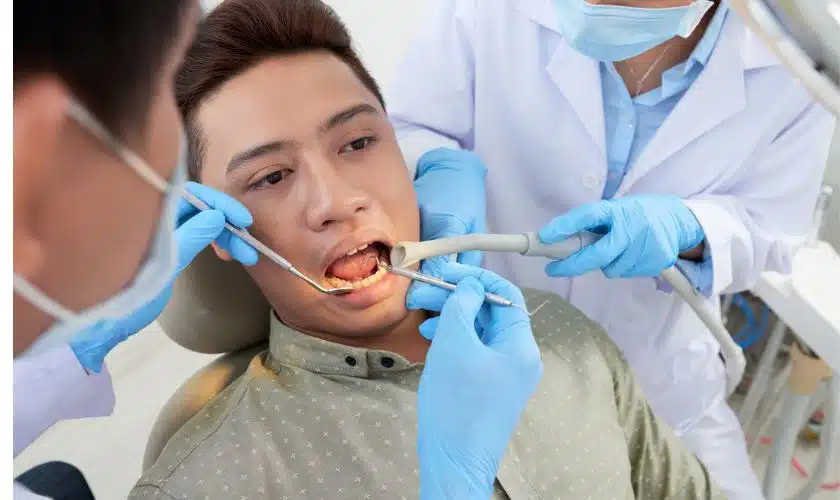
A dental emergency is a condition requiring immediate professional care. Delaying treatment increases the risk of infection, permanent damage, and tooth loss. Prompt action protects your oral health, and professional treatment supports a faster recovery. Here are a few steps to follow when you need an emergency dentist:
Contact an Emergency Dentist
Contact an emergency dentist as soon as you notice a persistent toothache, uncontrolled bleeding, severe facial swelling, or a knocked-out tooth. An emergency dentist team member will assess your symptoms over the phone and explain the next steps. Describe your symptoms, how the injury happened, when it started, and whether it is getting worse. Sharing such information helps your dentist decide whether you should immediately visit the clinic or follow certain first aid instructions before heading there. Postponing the call can lead to serious issues such as a dental abscess. A dental abscess, if left untreated, results in intense pain, swollen gums, fever, and infection.
Apply Appropriate First Aid
Proper first aid provides temporary relief and helps protect your teeth, gums, and surrounding tissues before you visit your dentist. There are various measures you can follow depending on the type of dental emergency you experience. If there is swelling on the face due to a toothache, place a cold compress on the outside of the cheek to reduce swelling. When a permanent tooth is knocked out, take it by the crown instead of the root to avoid damaging any tissues. Keep the tooth moist by placing it in milk and then take it to the emergency dental care clinic.
The dentist will evaluate whether the tooth can be saved. If your mouth is bleeding uncontrollably, apply gentle pressure with clean gauze to help stop it before you seek medical attention. First aid does not mean that you should not seek dental treatment; its function is to help minimize discomfort, control bleeding, and prevent further damage before a certified dentist offers any final treatment solutions.
Visit the Dentist Quickly
Your dentist conducts a thorough dental examination to identify the exact cause of the problem before treatment begins. They examine the affected tooth, gums, and surrounding tissues. They may also take digital X-rays to detect damage that is not visible during the initial assessment.
After reviewing the findings, your dentist explains the diagnosis and recommends the ideal treatment for you. If your tooth has a pocket of pus, the dentist will drain the abscess and treat the underlying infection to prevent further complications. Repairing a damaged tooth, controlling bleeding, or removing a tooth beyond repair are other treatment options.
Failure to seek professional treatment right away increases the risk of additional damage and makes some dental conditions more difficult to manage. After the visit, take any prescribed medications exactly as directed and attend recommended follow-up appointments. Follow-up appointments allow your dentist to assess your healing progress and determine whether additional treatment is needed.
Learn More About Dental Emergency
Immediate dental care minimizes pain, controls bleeding, saves teeth, and prevents infection. Delaying treatment increases complications because dental problems often worsen without professional care. Prompt action improves the chances of protecting your teeth and surrounding oral tissues. Contact a reputable emergency dentist to learn more about their solutions and scheduling.
