


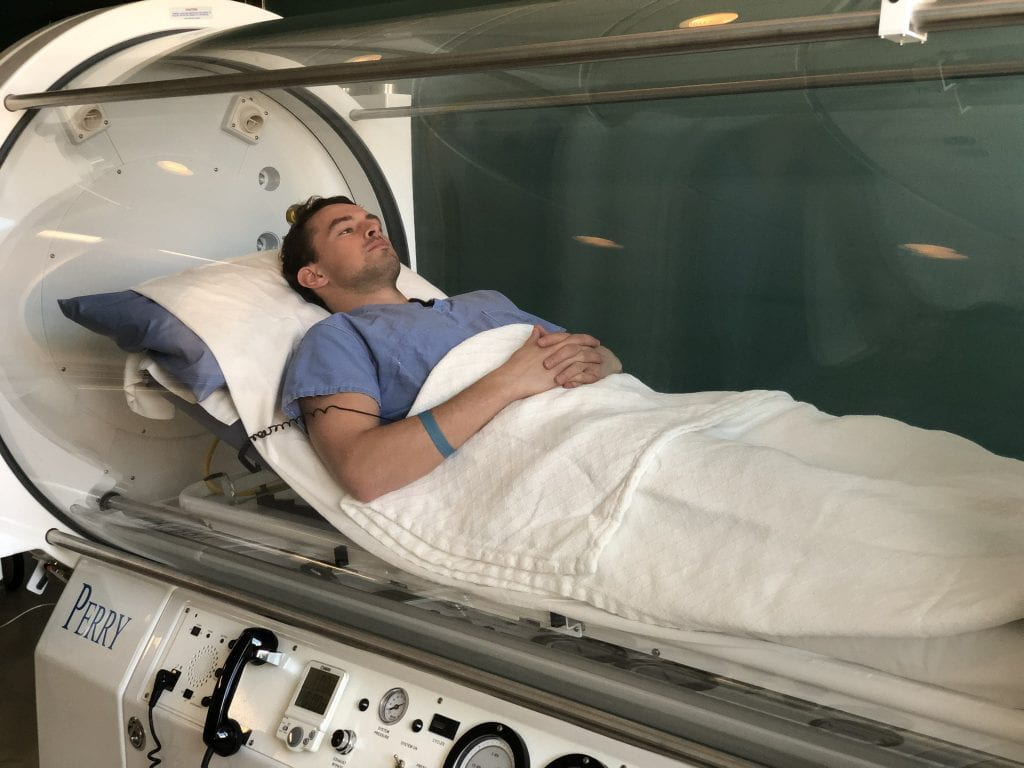
Hyperbaric oxygen therapy (HBOT) is a treatment in which you breathe 100 percent oxygen inside a pressurized chamber. During a session, the chamber pressure typically rises above normal atmospheric pressure, which allows your lungs to take in far more oxygen than they would at sea level. The extra oxygen dissolves directly into your blood plasma, and it travels to tissues throughout your body, including areas where blood flow is limited after surgery. Here is some information about the role of hyperbaric therapy in reducing recovery time after surgery:
Reduces Swelling and Inflammation
Swelling after surgery is a normal response to tissue injury. When a surgeon makes an incision, small blood vessels are damaged, and fluid leaks into the surrounding tissue. This buildup puts pressure on nearby cells and may slow the delivery of oxygen and nutrients to the healing site.
Breathing oxygen under pressure with HBOT causes blood vessels to narrow slightly. This reduces how much fluid leaks into tissue, but oxygen delivery stays high because so much oxygen is carried in the plasma. This helps maintain oxygen delivery to the surgical site while limiting swelling and supporting tissue repair.
Boosts Cell Repair
Every stage of wound healing depends on oxygen. Cells at the edge of a surgical wound often have a reduced oxygen supply, especially in people with diabetes or poor circulation. When oxygen levels drop too low, the repair process slows down. Fibroblasts are a key cell type affected; these produce collagen, the protein that gives new tissue its strength and structure. Fibroblasts need adequate oxygen to build strong collagen fibers. Higher oxygen levels may also support angiogenesis, which is the growth of blood vessels into healing tissue. New vessels bring a steady supply of blood to the area, and that supply remains in place long after each HBOT session ends. Results vary from person to person. Your medical team will review your health history, the type of surgery, and your current healing progress before recommending a treatment schedule.
Lowers Infection Risks
Surgical site infections are a common complication after an operation. White blood cells fight bacteria by using oxygen to produce compounds that destroy germs. In low-oxygen tissue, this process works less effectively. Hyperbaric therapy raises oxygen levels in the wound, which may help white blood cells perform this task. Some bacteria grow best in low-oxygen environments, and higher oxygen levels make conditions less favorable for them.
HBOT helps with certain wound-related complications, especially when infection or poor circulation interferes with healing. It may help manage:
- Gas gangrene: HBOT may help slow toxin production by the bacteria responsible for this serious infection.
- Compromised skin grafts and tissue flaps: The treatment helps preserve tissue when inadequate oxygen supply threatens a graft or flap.
- Selected severe infections: Clinicians sometimes use HBOT alongside antibiotics and surgery for certain serious infections.
Schedule Hyperbaric Therapy
Hyperbaric oxygen therapy helps address complications that delay surgical recovery, particularly when damaged tissue lacks sufficient oxygen to heal properly. By limiting fluid buildup and supporting collagen production, HBOT may strengthen healing tissue and preserve compromised grafts or flaps. A surgeon will assess whether this treatment is suitable based on the procedure performed. Contact a wound care specialist today to learn more.
