


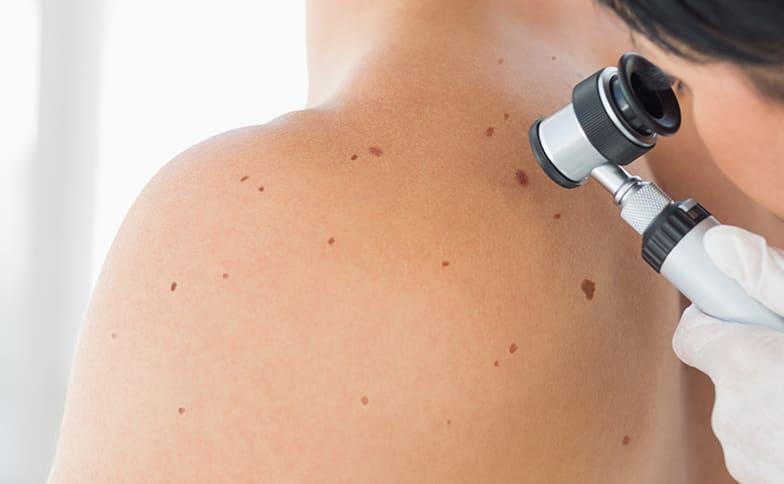
Skin cancer may first appear as a new or changing spot, an unusual mole, or a sore that does not heal. These changes can be easy to overlook, so knowing what to watch for can help you seek a timely skin evaluation. Here is an overview of the signs and symptoms to watch for when dealing with skin cancer:
Watch Changing Moles
Moles change in appearance over time, and tracking those changes helps you decide when to seek an exam. A mole that grows, darkens, or develops uneven edges stands out from the stable spots on your body. Dermatologists often reference a set of features when they assess moles for skin cancer, and you can use the same guide at home. Review your moles against the following characteristics:
- Asymmetry: One half of the mole does not match the other half in shape or size.
- Border: The edges look ragged, blurred, or notched rather than smooth.
- Color: The mole shows several shades, such as brown, black, red, or tan.
- Diameter: The spot measures larger than a pencil eraser, roughly six millimeters.
- Evolving: The mole changes in size, shape, color, or texture over time.
Notice New Growths
New growths deserve attention, especially on skin that gets frequent sun exposure. A fresh bump may look pearly, waxy, or slightly translucent, and some growths feel firm to the touch. You may spot these marks on your face, ears, neck, scalp, hands, or forearms, though they can develop anywhere. Not every new growth is a sign of skin cancer, but certain features make an exam helpful. A growth that bleeds easily, crusts over, or refuses to heal is different from an ordinary blemish. Some growths stay small while others expand, so tracking their size over time gives you useful information. Note the location and the date you first saw the mark, and share that record during your screening.
Check Persistent Sores
A sore that lingers longer than a few weeks is worth a closer look. Ordinary cuts and scrapes tend to close within days, but a persistent sore may reopen, ooze, or scab repeatedly. This pattern of healing and returning signals that you should see a dermatologist. Watch for these signs when you evaluate a sore that will not clear up:
- Recurring bleeding: The spot bleeds with light contact and then scabs again.
- Slow healing: The sore stays open or partly open for some time.
- Itching or tenderness: The area feels irritated, sore, or itchy without a clear cause.
- Raised edges: The rim of the sore looks rolled, shiny, or slightly elevated.
Act on Suspicious Changes
Act quickly when you notice something that looks or feels different. Book an appointment once a mole changes, a growth appears, or a sore refuses to heal, and describe the timeline clearly. Your dermatologist can examine the area, ask targeted questions, and recommend the next steps.
Preparation makes your visit more productive, so gather a few details ahead of time. List the spots that concern you, note when you first saw each one, and mention any family history of skin cancer. Bring photos if you have them and point out every area you want reviewed.
Schedule Your Skin Cancer Screening
Regular skin cancer screenings play a fundamental role in identifying potential concerns early and improving treatment outcomes. Preparing for your visit with a detailed list of areas to review, a timeline of changes, and relevant family history can support a focused and efficient examination. Schedule your skin cancer screening today to safeguard your skin health and take a proactive step toward early detection and care. Contact a modern dermatology practice near you to schedule your skin cancer screening today.
