


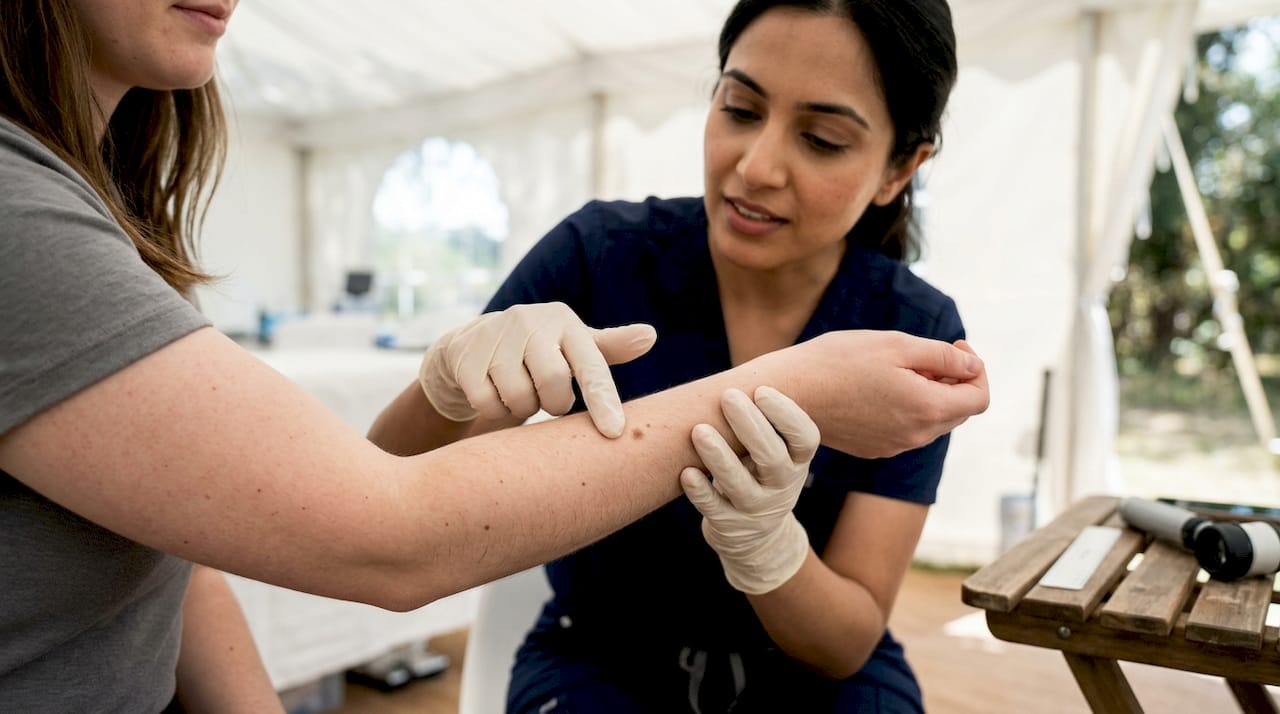
A persistent rash, changing skin area, or concern about your hair or nails may require a closer look. A comprehensive dermatology evaluation assesses your symptoms and medical history to guide appropriate care. Here is more information on why a thorough assessment matters:
Reviewing Your Health History
Your health history sets the foundation for your dermatology assessment, and the specialist starts here for good reason. You will describe your current symptoms, past skin conditions, and treatments you have tried, so the specialist can identify patterns. Here are key details that help the specialist understand context:
- Symptom timeline: You explain when the concern began and how it has changed, which helps distinguish new issues from long-standing ones.
- Family history: Certain skin conditions run in families, so this detail guides what the specialist looks for.
- Current medications: Some products and prescriptions affect the skin, and listing them clarifies possible triggers.
- Lifestyle factors: Sun exposure, stress, and daily habits affect skin health, and sharing them adds useful context.
Examining Affected Areas
The dermatology specialist examines the areas you flag, turning your description into direct observation. You may point to a rash on your arm, a patch of psoriasis, or a mole that has changed, and the specialist studies each one closely. During the examination, the specialist examines color, texture, size, and borders. The scope of the examination depends on your concerns, and the specialist may also check nearby skin. This broader look helps identify related findings that you may not have noticed. A careful review keeps the assessment grounded in what the skin actually shows.
Investigating Uncertain Findings
Some findings need a closer look, and the specialist investigates anything that appears unclear. When a mole, growth, or persistent rash raises questions, the specialist may recommend further steps to gather more information. Here are several methods that can help the specialist study uncertain findings:
- Dermoscopy: A magnifying tool reveals detailed skin patterns and helps the specialist examine moles and lesions.
- Skin biopsy: A small sample goes to a laboratory, so specialists can analyze the tissue directly.
- Patch testing: This method checks for reactions to specific substances, which helps identify triggers for certain rashes.
- Photography: Images document findings over time and support comparison at future visits.
Planning Care and Follow-Up
After the evaluation, the dermatology specialist outlines a care plan that reflects your specific findings. You may receive guidance on treatments, skincare routines, or monitoring, depending on what the assessment revealed. A clear plan gives you direction after the appointment ends.
Follow-up keeps your care on track; the specialist will tell you when to return. Some conditions need periodic checks, so the specialist can measure progress and adjust the approach. You play an active role here; consistent follow-up supports steady management of your skin concerns. You can report changes between visits, which helps the specialist respond promptly.
Schedule Your Dermatology Evaluation Today
Regular dermatology visits are key for addressing skin conditions effectively. They review your history, examine affected areas, investigate uncertain findings, and lead to a care plan built around you. Open communication and partnership with your specialist support a responsive and evolving approach to your care. Contact a qualified dermatologist near you to schedule your dermatology evaluation today.
