


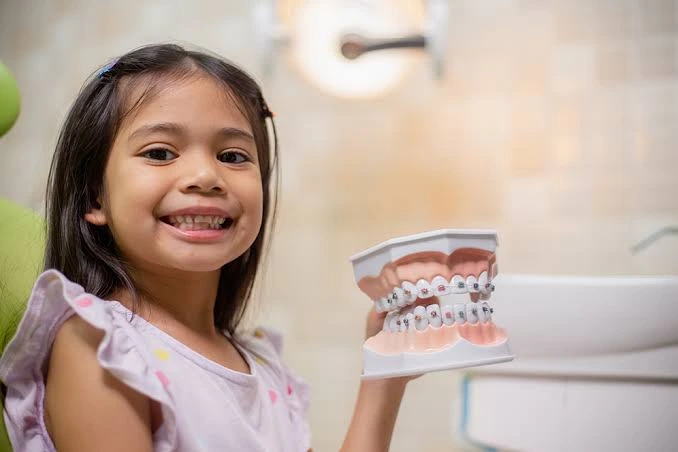
An early orthodontic evaluation can reveal concerns with a child’s developing teeth and bite before they become more difficult to address. It also helps determine whether braces are needed and when to start treatment. Here are the key benefits of an early orthodontic evaluation:
Detecting Developing Bite Problems
A bite problem describes the way upper and lower teeth meet when the jaws close. An early evaluation lets the orthodontist track how the bite develops, and this record makes it easier to recognize minor changes that may worsen over time. Here are some common patterns an orthodontist watches for during a braces evaluation:
- Overbite: The upper front teeth cover the lower front teeth more than expected.
- Underbite: The lower front teeth are ahead of the upper front teeth when the jaws close.
- Crossbite: Some upper teeth close inside the lower teeth rather than outside them.
- Open bite: The front teeth do not touch when the back teeth are closed together.
Monitoring Teeth and Jaws
Growth is a moving target, and a child’s teeth and jaws change as they age. An early braces evaluation lets the orthodontist track this growth over regular visits, capturing changes a single appointment may miss. Growth monitoring often involves photographs, measurements, and sometimes imaging that the orthodontist compares from visit to visit. Parents receive updates at each check, showing whether the teeth have moved as expected. When crowding or gaps appear, the orthodontist can describe how the spacing will develop as more permanent teeth arrive.
Choosing the Right Timing
Timing affects how and when braces treatment may begin. An early evaluation does not always mean braces start right away; instead, it helps the orthodontist recommend the best window. Some children benefit from watching and waiting, while others gain from early steps that guide growth. Here are a few points that affect treatment timing:
- Tooth eruption stage: The mix of baby and permanent teeth affects when treatment fits best.
- Jaw development: Active growth periods can influence how the jaws respond to guidance.
- Severity of the concern: Larger spacing or bite issues may require early attention.
- Child readiness: A child’s ability to care for appliances plays a role in scheduling.
Planning for Braces
After several evaluations, the orthodontist will outline whether braces suit the child. The outline usually includes the type of braces, the expected sequence, and the estimated treatment length. This preparation gives parents time to review schedules and daily care. The plan also explains how the family can keep the mouth healthy before and during treatment. Regular brushing, routine dental visits, and consistent follow-ups support the process, and the orthodontist clearly explains each responsibility. When parents know what to expect, they can arrange appointments with less guesswork.
Explore Your Options for Braces
An early orthodontic evaluation helps parents identify developing bite problems, monitor teeth and jaw growth, and plan ahead for braces. These benefits give families a practical way to understand their child’s dental development. To explore your options for braces, contact a qualified orthodontist near you to schedule your appointment today.
