


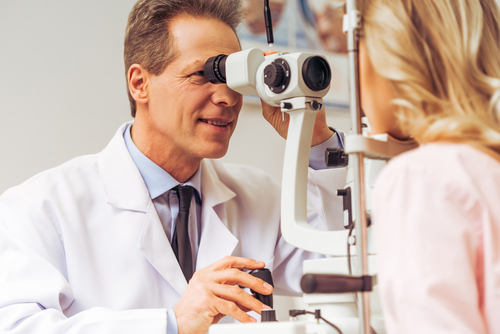
People can book an eye appointment after reading or driving becomes difficult. Several eye conditions develop gradually and may not cause noticeable changes until later stages, so eye care professionals generally recommend regular exams even when vision seems clear. Periodic visits create a record of your eye health that an optometrist can compare over time, from one year to the next.
What Is an Optometrist?
An optometrist is a doctor who provides primary care for the eyes and visual system. Their training covers eye anatomy, allowing them to detect eye disease. Optometrists perform eye exams, prescribe eyeglasses and contact lenses, and diagnose and manage many eye conditions. An optometrist is able to manage your routine visits, and they may refer you to an ophthalmologist if a condition requires surgical evaluation.
What Do They Treat?
Vision correction is a common reason for an optometry visit. Optometrists identify refractive errors, and these occur when the eye does not focus light evenly on the retina. These include nearsightedness, farsightedness, astigmatism, and presbyopia, a gradual decline in close-up focusing ability. Corrective options may include eyeglasses or contact lenses. Optometrists also address a range of other concerns, which can include:
- Surface and Comfort Issues: Dry eye and eye allergies
- Eye Disease Monitoring: Screening for glaucoma, cataracts, and macular degeneration
- Eye Coordination: Difficulty with focusing, tracking, or using both eyes together
When a finding falls outside their scope, optometrists may refer patients to the appropriate specialist.
What Should You Expect?
An eye exam follows a general sequence, but the specific tests can vary based on your age and health history. The visit may open with a discussion of your health background. You can be asked about vision changes, eye discomfort, current medications, and whether relatives have had eye conditions. If you wear glasses or contacts, bring them so the optometrist is able to review your current prescription.
Vision Testing
Preliminary tests may assess color vision, depth perception, side vision, and how your pupils respond to light. You can also be asked to read letters from an eye chart, and this is used to measure sharpness of vision. To find your prescription, the optometrist places a series of lenses in front of your eyes and asks which option appears clearer.
Eye Health Evaluation
The optometrist examines the front and back of each eye. A specific instrument measures the pressure inside the eye, and some offices use digital imaging to photograph the retina. Your optometrist may apply drops for the evaluation, which widen the pupils for a fuller view. These drops can cause blurry close-up vision and light sensitivity for several hours. The optometrist may explain the findings and describe any recommended next steps, such as updated lenses or a return visit.
Schedule an Eye Exam
Vision screenings offered at schools typically check only how clearly a person sees at a distance. These brief checks do not evaluate the internal health of the eye; they are not a substitute for a comprehensive exam. Contact lens wearers should also note that a contact lens prescription differs from an eyeglass prescription. It requires additional measurements of the eye’s surface and a fitting evaluation, often scheduled as part of the same appointment. Contact an optometrist to schedule a comprehensive eye exam and set a care plan suited to your age and vision needs.
