


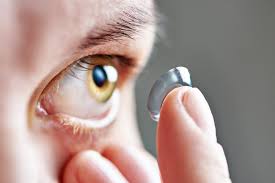
Daily contact lenses offer convenience and lower infection risk because they are discarded each night, while monthly lenses suit patients with a consistent cleaning routine. The right choice depends on a patient’s lifestyle and ocular health. Because individual eye-care needs vary, consulting an ophthalmologist helps determine the right treatment option. Here is more information on what contact lenses are, the main types available, and the benefits and drawbacks of each wearing schedule:
What Are Contact Lenses?
Contact lenses are thin, curved medical devices placed directly on the surface of the eye. They correct refractive errors such as nearsightedness, farsightedness, and astigmatism by bending light as it enters the eye, allowing it to focus properly on the retina. Unlike glasses, contact lenses move with the eye, and patients may experience improved peripheral vision and reduced distortion.
Many lenses are made from soft, flexible materials. These materials allow oxygen to pass through to the cornea, which supports eye health during wear. An eye doctor’s prescription is required; it determines the curvature, diameter, and power needed for a proper, comfortable fit.
What Are the Different Types?
Contact lenses are typically categorized by how often they are replaced. Common replacement schedules include:
- Daily lenses, which are worn once and discarded at the end of the day, eliminating the need for cleaning solutions or storage cases.
- Weekly lenses, which are replaced every week and require nightly cleaning and disinfecting with a contact lens solution.
- Monthly lenses, which are worn repeatedly for a month and similarly require nightly cleaning, disinfecting, and a storage case.
An ophthalmologist can recommend the most appropriate replacement schedule based on a patient’s prescription, tear production, and daily habits.
What Are the Pros?
Daily lenses offer convenience, and reduced handling lowers the likelihood of eye irritation. Since a new pair is used every day, there is no cleaning, soaking, or case maintenance involved. Fresh lenses reduce allergen buildup and protein deposits that accumulate over time. Daily lenses may suit patients with allergies or busy schedules.
Monthly lenses offer distinct advantages in durability and material composition. Because a single pair is designed to withstand extended daily wear over several weeks, manufacturers may use thicker, more robust materials. Patients may find these lenses comfortable for prolonged use, and their construction supports consistent wear. Monthly lenses may also be available in a wider range of specialty designs.
What Are the Cons?
Daily lenses require a valid prescription and must be fitted by a licensed eye care professional, limiting immediate access for some patients. Because daily lenses are single-use, patients must maintain an adequate supply to avoid interruptions in wear. Unexpectedly running out of lenses is disruptive, but patients can reduce this risk by monitoring their supply and reordering in advance. Monthly lenses require a disciplined care routine, and skipping steps can lead to complications. Tap water must never substitute for contact lens solution, as it introduces microorganisms that increase the risk of corneal infections.
Learn More From an Ophthalmologist
Daily and monthly contact lenses each offer distinct benefits depending on how often you wear lenses and your tolerance for cleaning routines. Daily lenses simplify hygiene and reduce allergen exposure, while monthly lenses support specialty prescriptions. The right fit depends on your individual eyes and lifestyle. If you need contacts, schedule a consultation with an ophthalmologist. An ophthalmologist can evaluate your prescription, tear film, and daily habits to recommend the lens type that fits your needs.
